(260) 232-0280 Fort Wayne | (260) 925-9161 Auburn
A Patient's Guide to Straightening Teeth
in Fort Wayne & Auburn, IN
TRADITIONAL BRACES
Understanding Traditional Braces and Your Teeth-Straightening Options
Traditional braces are one of the most familiar ways to straighten teeth. Whether someone has a few crooked or crowded teeth or a bite that needs complete realignment, braces apply steady, gentle pressure that moves teeth into better positions over time. This guide explains how traditional braces work, who they're usually recommended for, and how they compare to clear aligners, so you can feel informed before you decide how to straighten your smile.
Please note: Sedation & Implant Dentistry does not provide traditional braces. If clear aligners are a good fit for your smile, we offer SureSmile® clear aligners at our Fort Wayne and Auburn, IN, offices.
How Traditional Braces Work
Traditional braces have three main parts: small brackets bonded to the front of each tooth, a thin archwire that runs through the brackets, and small elastic or metal ties that hold the wire in place. The wire puts light, continuous pressure on the teeth. Over time, the bone around each tooth remodels so the tooth can move into its new position.
Braces are usually placed and managed by an orthodontist, a dental specialist with additional years of training in tooth movement and jaw alignment. The orthodontist adjusts the wire every few weeks to keep treatment on track. Total treatment time depends on the case and often lasts one to three years. A retainer is usually worn afterward to help keep teeth from shifting back.
Today's braces come in several styles, including classic metal brackets, tooth-colored ceramic brackets, and lingual braces placed on the back of the teeth.
Who Traditional Braces Are For
Braces can address a wide range of orthodontic concerns, including:
- Crowded, crooked, or rotated teeth
- Gaps or spacing between teeth
- Bite problems such as overbite, underbite, crossbite, and open bite
- Complex cases that need large or precise tooth movements
Children and teens are often evaluated for braces while their jaws are still growing, but adults of any age can straighten their teeth too.
Pros and Cons of Traditional Braces
Potential advantages:
- Can treat complex cases that aligners may not be able to
- Fixed in place, so there's nothing to remember to wear
- Durable and reliable
- Often an economical teeth-straightening option
Potential drawbacks:
- Brackets and wires are visible, especially metal braces
- Hard, sticky, and chewy foods usually need to be avoided
- Brushing and flossing take more time and effort
- Brackets and wires can irritate the cheeks and lips
- Regular adjustment visits are needed throughout treatment
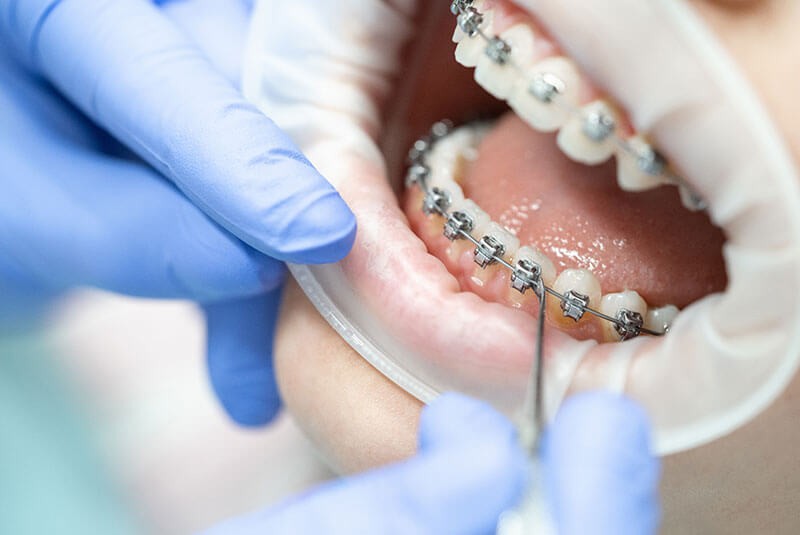
Braces
Why Straight Teeth Matter for Your Health
A straighter smile can boost your confidence, but the benefits go beyond looks. Well-aligned teeth are easier to brush and floss because there are fewer tight spaces and gaps where food and plaque collect. That can make it easier to lower your risk of tooth decay and gum disease over time. A properly aligned bite can also make chewing and speaking more comfortable and reduce uneven wear on your teeth.
Clear Aligners: A Discreet Alternative to Braces
For many teens and adults with mild to moderate crowding or spacing, clear aligners are an appealing alternative to traditional braces. Instead of brackets and wires, aligners are a series of custom, nearly invisible plastic trays that gradually shift your teeth. They're removable, so you can eat what you like and brush and floss normally. They usually need to be worn 20 to 22 hours a day, with a new set every couple of weeks.
At Sedation & Implant Dentistry, Dr. David Painter offers SureSmile® clear aligners at our Fort Wayne and Auburn, IN, offices. Clear aligners aren't the right fit for every case, and some complex bite problems are best treated by an orthodontist with traditional braces. A consultation can help you understand which approach makes sense for your smile.
Curious Whether Clear Aligners Are Right for You?
If you'd like a straighter smile without brackets and wires, schedule a consultation with Dr. Painter to find out if SureSmile® clear aligners can help you reach your goals.